Models
Short video with MiniMax Hailuo: models and prompt tips
Hailuo is MiniMax's family of video models. Hailuo 02 and 2.3 arrived in 2025 and H3 followed in July 2026. Official capabilities, reference-based generation and short-clip prompts, in one guide.
Zling AI Team7 min read
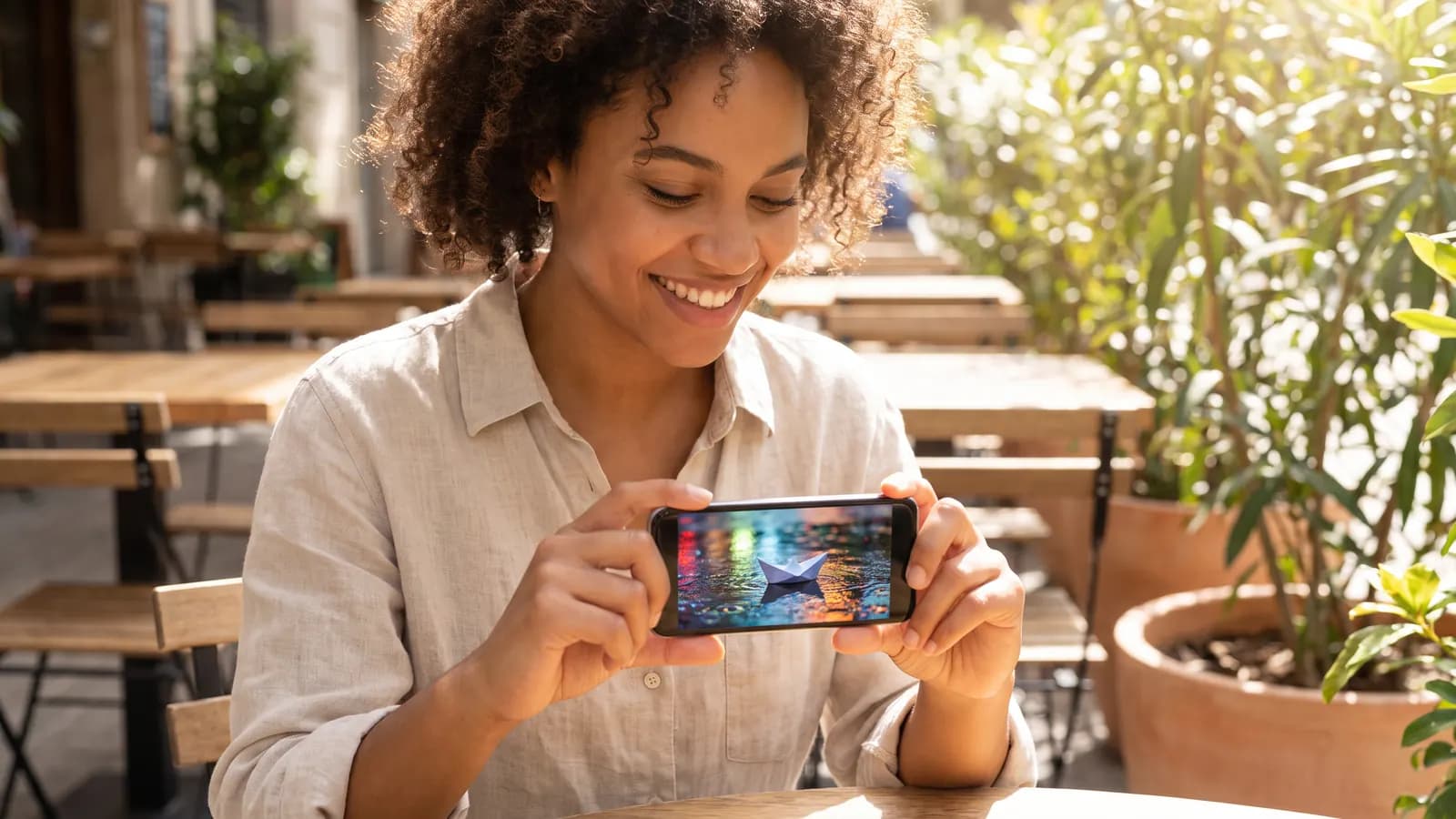
Short answer: Hailuo is the video generation model family from the Chinese AI company MiniMax. Hailuo 02 was announced in June 2025 and Hailuo 2.3 in October 2025; in July 2026 came "H3", a general-purpose multimodal model. It produces short clips from text or from a photo, and with H3 reference images, video and audio can be inputs as well. This article covers only what MiniMax's official announcements and API documentation state, followed by how to write prompts for short clips.
What is Hailuo and which versions exist?
Hailuo is MiniMax's set of video models, offered through its own website, mobile app and API platform. The version history from official sources looks like this:
| Version | Announced | Highlights in the official announcement |
|---|---|---|
| Hailuo 02 | June 18, 2025 | Native 1080p; 6 or 10 seconds at 768p, 6 seconds at 1080p; emphasis on instruction following and physics |
| Hailuo 2.3 and 2.3 Fast | October 28, 2025 | More realistic body movement, lighting and shadow, broader style support, natural micro-expressions on faces |
| H3 and H3 Max | July 31, 2026 | Text, image, video and audio input; native stereo sound; up to 15 seconds of video; 2K by default |
The Hailuo 02 announcement says the model arrived with three times the parameters and four times the training data of Hailuo 01. The Hailuo 2.3 announcement says 2.3 is built on Hailuo 02 and that the "Fast" version is a quicker and cheaper option for batch creation. The announcement does not give duration or resolution, and MiniMax's API model list does not give them for 2.3 either. That is why we do not state 2.3's limits here.
What does Hailuo 2.3 do?
According to MiniMax's announcement, 2.3 improves in these areas: more realistic body movement even during dynamic camera moves, better physics and instruction following, near-photorealistic light, shadow and color tones, styles such as anime, illustration, ink wash painting and game graphics, and more natural facial expressions in live-action-style content. The announcement also says objects respond better to motion commands.
According to the model list in the API documentation, MiniMax-Hailuo-2.3 works for both text-to-video and image-to-video, while MiniMax-Hailuo-2.3-Fast is image-to-video only. In other words, you cannot generate from text with the Fast version; you need a photo first.
What changed with H3?
MiniMax introduced H3 as "an open model breaking the boundaries between tasks and modalities". According to the official blog post, the model understands text, images, video and audio in a single context; its output is video with native stereo sound up to 15 seconds long, with 2K as the default resolution. On the audio side, speech, sound effects and music are modeled together rather than separately. The blog lists reference-based generation and editing tasks such as image-to-image, image-to-video, audio-to-audio and, in particular, video-to-video motion transfer. In an investor announcement dated August 3, 2026, MiniMax stated that it was officially open-sourcing H3.
The API documentation provides the details:
| Model | Resolution | Duration | Modes |
|---|---|---|---|
| MiniMax-H3 | 768P or 2K | 4 to 15 seconds | Text-to-video, image-to-video (first and/or last frame), reference-based generation |
| MiniMax-H3-Max | 480P or 768P | 5 to 15 seconds | Text-to-video, image-to-video (first/last frame); post-trained from H3 for faster generation |
In reference mode, according to the documentation, you can supply up to 9 images, 3 videos and 3 audio clips, with at most 12 files in total; the aim is to keep a character, motion, camera, style or voice consistent. Input images must have an aspect ratio between 2:5 and 5:2. The documentation sets limits of 50 MB per video, 30 MB per image and 15 MB per audio file.
How do you write a good Hailuo prompt?
The documentation suggests writing camera commands in square brackets: you add commands such as [pan], [zoom] or [static] right after the relevant description. For H3 the prompt can be up to 7,000 characters, so there is room for a long, detailed description. For a short clip, though, a small, clear plan works better.
A practical skeleton for short clips:
- Subject and action: Pick one main movement.
- Setting and light: Where, what time of day, where the light comes from.
- Camera: One camera command, placed right next to the description.
- Sound (in H3): Ambient sound, music or a short line of dialogue.
A small paper boat sails across a rain puddle on a cobblestone street, droplets ripple outward, soft overcast light, shallow depth of field. [Zoom in] slowly toward the boat. Gentle rain sounds and a distant tram bell.
In image-to-video the photo becomes the first frame; do not re-describe the image in the prompt, write only what will move and what the camera will do:
The woman lifts her cup and smiles toward the street, steam rises, leaves sway in the breeze. [Static] shot.
You can supply the start and end frames separately (0 to 2 images); this helps when you want to pin down how the clip begins and ends. In H3's reference mode, state clearly in the prompt what each file is: "the character in the first image", "the camera movement of the reference video".
How should you choose duration and resolution?
The documentation lets you choose between 768P and 2K for H3, while H3 Max offers 480P and 768P and is designed for speed. When you are testing an idea, low resolution and short duration make sense; move to higher resolution once the prompt has matured. MiniMax also offers a separate regeneration task to upscale an H3 768P video to 2K.
What are the known limits?
- MiniMax's own caveats: The H3 announcement says multimodal understanding still has room to improve, visual detail can be better in some scenarios, and the current model size leaves room for improvement across several capabilities.
- Language: The sources make no performance commitment for Turkish; for important work an English prompt is more predictable.
- Access differences: Duration and resolution options may differ between the web app, the API and local runs of the open weights. According to the documentation, the H3 API currently works on a pay-as-you-go plan.
- Older versions may be dated: Hailuo 02 and 2.3 are still in the API model list, but the newer capabilities (audio, reference-based generation) arrived with H3.
If you use photos or voices of real people as references, get their permission, and label the generated video as AI-generated.
A short checklist for your first clip
If you follow this order on your first try with Hailuo, you will save time. First decide which mode to work in: text-to-video if you have only an idea, image-to-video if you have a photo, reference-based generation if you have several files. Then choose a short duration and low resolution; at this stage the aim is not a beautiful result but to see whether the prompt is understood correctly.
- Mode: Text, a single photo or reference files.
- Duration and resolution: Short and low for a draft, longer and higher for the final.
- Prompt: One action, one camera command, clear light.
- Check: Watch the result, change a single detail and retry.
- Record: Download the clip you like right away and note the settings you used.
Common mistakes
- Loading too many events into a short clip: Pick one main movement; build the story clip by clip.
- Writing several camera commands: Start with one instead of stacking [pan] and [zoom].
- Expecting text-to-video from the Fast version: 2.3 Fast works only for image-to-video.
- Not giving references a role: When you supply many files, say in the prompt what each one is.
- Starting at the highest resolution: Mature the prompt at 768P or lower first.
- Ignoring the image ratio: Input images must stay between 2:5 and 5:2.
Summary
- Hailuo is MiniMax's video model family: 02 (June 2025), 2.3 (October 2025), H3 (July 2026).
- H3 combines text, image, video and audio input and produces video with stereo sound up to 15 seconds.
- According to the API documentation, H3 is 768P or 2K, 4-15 seconds; H3 Max is 480P-768P, 5-15 seconds.
- Write camera commands in square brackets, right next to the description.
- For a short clip: one action, one camera command, clear light.
- Get permission for real people's material and label the video.
Frequently asked questions
Whose model is Hailuo?
Hailuo is the video generation model family of the company MiniMax. According to official announcements, Hailuo 02 was announced in June 2025, Hailuo 2.3 in October 2025 and H3 in July 2026.
How many seconds of video does Hailuo generate?
The Hailuo 02 announcement lists 6 and 10 second options. According to MiniMax's API documentation, H3 does 4 to 15 seconds and H3 Max 5 to 15 seconds. For Hailuo 2.3 this information does not appear in the official sources.
Can Hailuo generate video with sound?
According to MiniMax's H3 announcement, H3 models speech, sound effects and music together and produces video with native stereo sound. Audio support is not stated in the official sources for 2.3.
How do I control camera movement in Hailuo?
MiniMax's H3 documentation suggests writing commands such as [pan], [zoom] or [static] in square brackets, right after the relevant description. You can also pin down the clip's frame by supplying start and end frames.
Is H3 open-weight?
In an investor announcement dated August 3, 2026, MiniMax stated that it was officially open-sourcing H3. For license and local-run details, read MiniMax's open-source announcement and the model page.
Sources
- MiniMax (2025), MiniMax Hailuo 02 duyurusu
- MiniMax (2025), MiniMax Hailuo 2.3: A New Level of Complex Video Performance & Media Agent
- MiniMax (2026), MiniMax H3: An Open Model Breaking the Boundaries Between Tasks and Modalities
- MiniMax Investor Relations (2026), Open General Intelligence: MiniMax H3 Is Now Open Source
- MiniMax API Docs: Video Generation
- MiniMax API Docs: Model List
Related posts

Models
What is Nano Banana? Editing photos with Google's image model
Nano Banana is the nickname of Google's Gemini image models. You upload a photo, say in one sentence what should change, and the model keeps the rest. This guide covers the versions, prompt examples and limits.
10 min read

Models
Video generation with Veo 3.1: what it does and where it stops
Veo 3.1 is Google DeepMind's model that turns text and photos into short videos with sound. We cover what it can do according to the official docs, its length and resolution limits, and how to build a good video prompt.
9 min read

Models
From photo to video with Kling: motion, camera and length
Kling is Kuaishou's video model: it takes a photo as the starting point and animates it according to the motion you describe. We cover lengths by version, camera and motion prompts, video with sound and common mistakes.
9 min read